Summarize This Guide with AI
The page title, key topics and source link are passed to your selected tool in a prepared prompt.
On this page
A penis can look shorter because part of the shaft is concealed by suprapubic fat, excess skin, scar tissue or other surrounding tissue. That does not automatically mean the penis itself is anatomically short. In adult acquired buried penis, a normally developed penis may be partly or extensively hidden and the problem can affect urination, hygiene, skin health and sexual function as well as appearance. The first task is therefore to distinguish reduced visible length from reduced anatomical length and to identify why the shaft is concealed.
What is the suprapubic area?
The suprapubic area is the region between the lower abdomen and the base of the penis. The thickness and position of its fat and skin vary between individuals and can change with weight gain, major weight loss, ageing, surgery, scarring and chronic skin disease.
When tissue over the penile base becomes prominent, less of the shaft may be visible externally. This is different from the erectile tissue becoming shorter.
Terms such as “pubic contouring” or “suprapubic reduction” describe a region, not one standard operation. Assessment may need to consider:
- the amount and distribution of suprapubic fat;
- skin excess or laxity;
- scarring and tissue fixation;
- whether the penis can be fully exposed;
- genital skin disease;
- urinary and hygiene symptoms;
- whether a reconstructive rather than cosmetic problem is present.
What is a buried penis?
A buried penis is a penis that is partly or completely concealed by surrounding skin, fat, scar or swollen tissue despite the penile structures being present. When this develops in adulthood it is usually described as adult acquired buried penis (AABP).
Severity varies. Some men have concealment mainly at the base; in more advanced cases, much of the shaft or glans may be difficult to expose.
Possible associated problems include:
- difficulty directing the urinary stream;
- post-void dribbling or urine contacting surrounding skin;
- persistent moisture and irritation in skin folds;
- recurrent local fungal or bacterial infection;
- unpleasant odour or difficulty maintaining hygiene;
- painful skin splitting or scarring;
- pain during erection;
- difficulty with penetrative sex;
- difficulty exposing the penis for examination;
- inability to retract surrounding tissue enough to reveal the shaft.
A short-looking penis is not automatically a buried penis. Diagnosis should not be made from a photograph or self-measurement alone.
Is buried penis the same as micropenis?
No. They are different clinical concepts.
Micropenis refers to a genuinely reduced penile length measured with a standardized technique and interpreted against age-appropriate norms. It is usually related to developmental or hormonal factors.
In buried penis, the penile tissue is often within the normal anatomical range but is hidden by surrounding tissue. Pressing the suprapubic tissues back during examination may reveal a greater proportion of the shaft.
Other situations also need to be distinguished, including:
- normal penile measurements with intense small-penis concern;
- suprapubic fat causing reduced shaft exposure;
- cicatricial or trapped penis due to scar tissue;
- congenital concealed penis;
- acquired loss of length associated with Peyronie’s disease;
- tissue loss after trauma or surgery;
- penoscrotal webbing.
This distinction matters because an operation aimed at one anatomical problem may not address another.
Why can adult acquired buried penis develop?
AABP usually has more than one contributing factor.
Obesity and a prominent suprapubic fat pad
Increased lower abdominal and suprapubic adipose tissue can cover the penile base. With time, tissue weight, skin laxity and downward displacement may further reduce shaft exposure.
Excess skin after weight loss
Weight loss can improve overall health and may reduce suprapubic fat, but redundant lower abdominal or pubic skin can remain. In that situation, fat volume is only part of the anatomy.
Scar tissue and previous procedures
Circumcision, genital surgery, trauma, infection or previous aesthetic procedures can produce restrictive scarring. A tight scar may trap the penile shaft or prevent normal skin movement.
Lichen sclerosus
Lichen sclerosus is a chronic inflammatory skin condition that can cause whitening, tightening and scarring of genital skin. In some patients it can also involve the urethral opening or urethra. When it coexists with a buried penis, treatment may need to address both skin disease and reconstruction.
Chronic inflammation, lymphedema or hidradenitis
Persistent moisture, urine exposure and friction can damage the skin barrier and promote recurrent inflammation. Genital lymphedema or hidradenitis suppurativa can also produce substantial swelling, inflammation and scar. These situations are not adequately described as a simple “fat pad” problem.
Visible length is not the same as anatomical length
This distinction is central to assessment.
- Anatomical length describes the actual penile structure.
- Visible length describes the part not concealed by surrounding tissue.
- Stretched penile length is a standardized clinical measurement used in size assessment.
- Erect length is measured during erection.
- Functional exposure describes how much of the penis can be used comfortably for urination, hygiene or sexual activity.
Reducing suprapubic concealment does not create new erectile tissue. It may expose more of the shaft that is already present.
Clinical perspective
Dr. Cem Özlük MD. describes an important distinction in the Turkish source content:
“For some patients, the aesthetic issue is not the penis itself, but how much of it is visible.”
This observation should be treated as a clinical assessment principle, not as a promise that suprapubic treatment will produce a predetermined increase in visible length.
The broader relationship between visible length, anatomy, proportion and treatment suitability is discussed in the APEX Holistic Assessment Framework on the penis enlargement page.
Can weight loss improve a buried appearance?
It can help some people. Reducing body weight may reduce suprapubic fat and can also improve metabolic and anaesthetic risk. However, weight loss does not necessarily resolve:
- redundant skin;
- fixed scar tissue;
- diseased penile skin;
- lymphedema;
- lichen sclerosus;
- complex changes after previous surgery.
Weight management and surgical assessment are therefore not interchangeable. Stable weight, the pattern of fat loss and the remaining skin and scar anatomy all matter.
Is suprapubic surgery the same as penile lengthening surgery?
No. They target different structures.
Suprapubic procedures address tissues around the penile base. Suspensory ligament release addresses structures anchoring the penis to the pubic region. Neither procedure adds new erectile tissue.
This means a patient whose main problem is concealment by a fat pad may need a very different discussion from a patient asking about penile lengthening surgery.
Does suprapubic liposuction correct every buried penis?
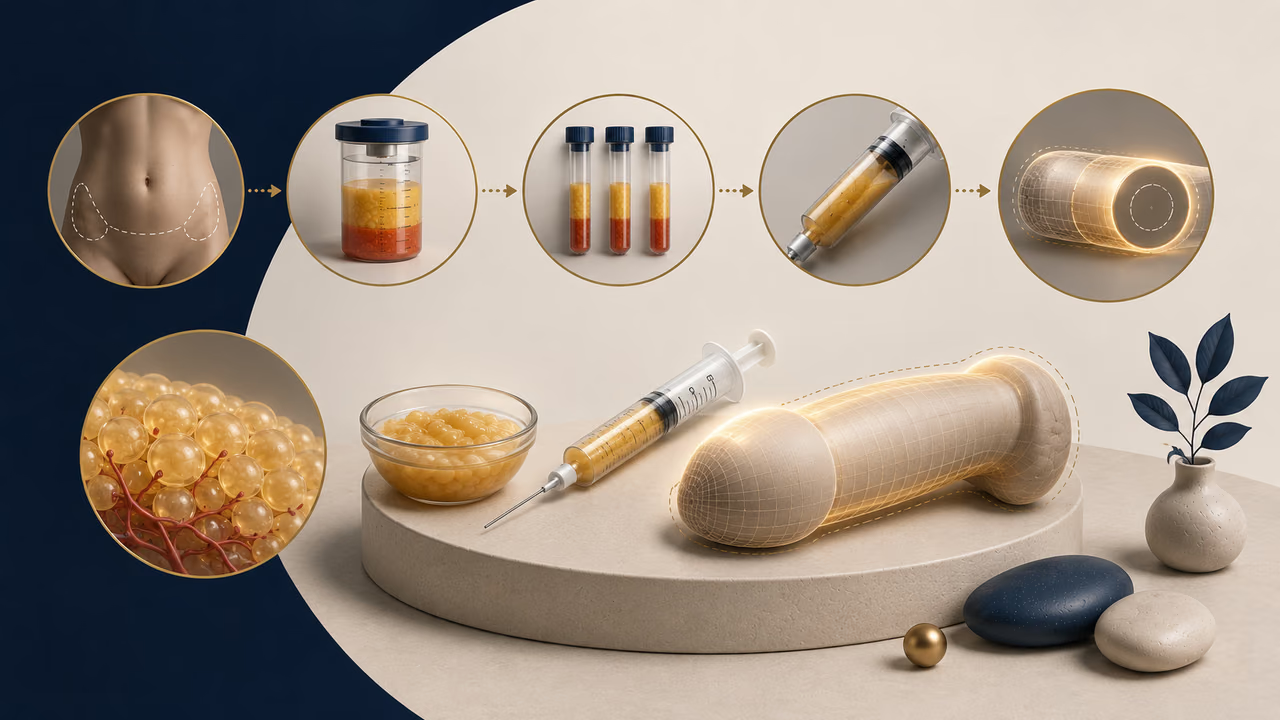
No. Liposuction can reduce subcutaneous fat in selected anatomy, but it does not remove redundant skin, release scar tissue, replace unhealthy penile skin or treat lymphedema and inflammatory disease.
It may be insufficient when there is:
- marked skin redundancy;
- advanced burial;
- significant scar or cicatricial trapping;
- lichen sclerosus;
- genital lymphedema;
- hidradenitis suppurativa;
- urethral disease;
- major tissue changes after previous operations.
Adult buried penis reconstruction can therefore be considerably more complex than cosmetic fat reduction.
What treatment approaches may be considered?
Treatment depends on the underlying cause rather than on appearance alone. Options described in the literature can include:
- weight and metabolic risk management;
- treatment of active infection or inflammatory skin disease;
- suprapubic liposuction in selected patients with suitable skin quality;
- removal of a larger suprapubic fat pad or redundant skin when indicated;
- release of restrictive scar tissue;
- penile skin reconstruction or grafting in complex cases;
- correction of associated penoscrotal anatomy when required.
The EAU describes suprapubic liposuction, lipectomy or related procedures as possible options for selected men with buried penis anatomy, but the evidence base is limited and recommendations are weak. Adult AABP literature likewise emphasizes individualized reconstructive planning rather than a single standard technique.
Who may need a reconstructive rather than cosmetic assessment?
A reconstructive urology assessment becomes particularly important when concealment is associated with:
- urinary spraying or inability to void standing;
- recurrent infection or chronic skin breakdown;
- severe scarring;
- lichen sclerosus;
- inability to expose the glans or shaft;
- significant lymphedema;
- previous failed surgery;
- urethral symptoms;
- functional sexual difficulty.
These problems should not be reduced to an appearance-only discussion.
What is assessed before a procedure?
Assessment may include:
- standing and supine examination;
- ability to expose the penis manually;
- suprapubic fat and skin distribution;
- penile skin quality;
- scars and previous surgical incisions;
- stretched and visible penile measurements where relevant;
- urinary symptoms and meatal/urethral concerns;
- active infection or inflammatory disease;
- weight trend and metabolic health;
- smoking or nicotine exposure;
- sexual function and expectations.
In selected patients, ultrasound, urethral investigation or additional medical assessment may be needed depending on symptoms.
What are the main risks?
Risk varies substantially with the extent of surgery. Potential complications can include:
- bleeding or haematoma;
- infection;
- delayed wound healing or wound separation;
- seroma or persistent swelling;
- scar problems;
- altered sensation;
- contour irregularity;
- recurrent concealment or residual skin/fat;
- skin-graft problems in reconstructive cases;
- need for further surgery.
Obesity, diabetes, smoking, chronic skin disease and extensive previous surgery can complicate wound healing and should be considered during planning.
What does recovery depend on?
Recovery after limited liposuction is not comparable with recovery after lipectomy, skin excision or complex buried-penis reconstruction. The amount of tissue treated, use of drains or grafts, wound location, medical conditions and healing response all change the course.
A single “return to normal in X days” statement would therefore be misleading across this category.
When is prompt medical assessment important?
Seek prompt assessment for new or worsening:
- inability to urinate;
- rapidly increasing swelling;
- severe pain;
- fever or spreading redness;
- foul-smelling discharge;
- skin breakdown or dark discoloration;
- inability to expose the penis when this is a new change;
- bleeding or wound separation after surgery.
Is scrotoplasty the same issue?
No. Scrotoplasty concerns scrotal skin and/or the penoscrotal junction. It may sometimes be part of a broader reconstruction, but scrotal laxity, penoscrotal webbing and suprapubic concealment are separate anatomical problems.
Medical information note
This page provides general medical information. A short-looking penis can reflect anatomical length, visible exposure, suprapubic tissues, scarring, skin disease or body-image concerns. Treatment suitability can only be determined after the underlying cause is identified.
Sources4 sources
2026
European Association of Urology. *EAU Guidelines on Sexual and Reproductive Health — Penile Size Abnormalities and Dysmorphophobia*. 20262020
Smith-Harrison LI, Piotrowski J, Machen GL, Guise A. *Acquired Buried Penis in Adults: A Review of Surgical Management*. Sex Med Rev. 2020;8(1):150-157. PMID: 31101591PubMed: 31101591
2021
Cohen PR. *Adult Acquired Buried Penis: A Hidden Problem in Obese Men*. Cureus. 2021. PMID: 33680609PubMed: 33680609
2021
Staniorski CJ, Rusilko PJ. *The concealed morbidity of buried penis: a narrative review of our progress in understanding adult-acquired buried penis as a surgical condition*. Transl Androl Urol. 2021;10(6):2536-2543. PMID: 34295741PubMed: 34295741