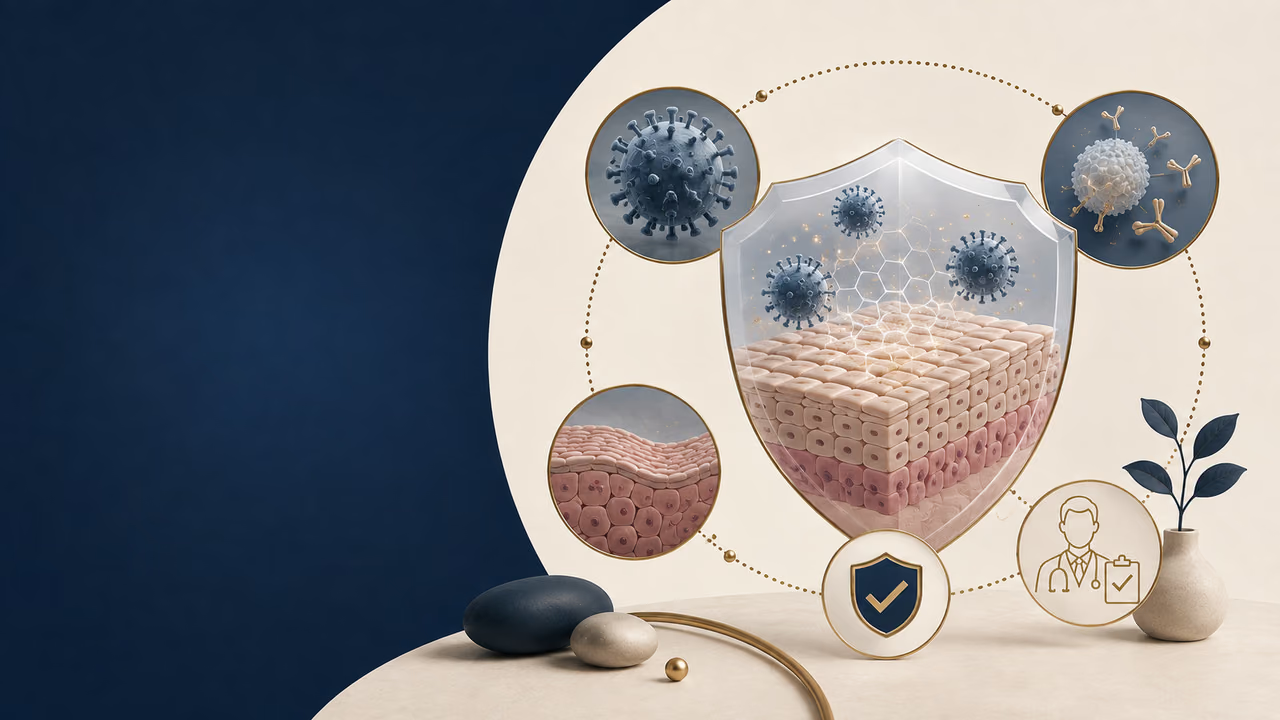
Human papillomavirus (HPV) is a common group of viruses that can affect genital skin and mucosa in both men and women. Some HPV types are associated mainly with genital warts, while persistent infection with certain high-risk types is associated with several cancers. HPV is not the same thing as every genital infection, and not every genital lesion is HPV. A new lump, sore, rash, discharge or urinary symptom should be assessed according to its actual features rather than diagnosed from an online photograph.
What is HPV?
HPV includes many virus types. From a patient-information perspective, two broad distinctions are useful:
- low-risk types, which are commonly associated with genital warts;
- high-risk types, which can be associated with precancerous change and cancer when infection persists.
Having HPV does not mean a person has cancer. Most HPV infections are controlled by the immune system, while persistent infection with particular high-risk types is the concern in cancer prevention.
Read the genital warts and HPV guide.
Are all genital lumps or lesions caused by HPV?
No. Genital lesions can have many causes, including:
- normal anatomical variants;
- skin tags or benign growths;
- molluscum contagiosum;
- herpes-related lesions;
- inflammatory or dermatological conditions;
- bacterial or fungal infections;
- trauma or irritation;
- premalignant or malignant lesions in a minority of cases.
A lesion that is bleeding, ulcerated, unusually pigmented, firm, fixed, rapidly enlarging, diagnostically uncertain or not responding as expected should not simply be assumed to be a wart.
How does HPV spread?
HPV is transmitted mainly through intimate skin-to-skin contact, including sexual contact. Penetrative intercourse is not required for transmission. A person may carry HPV without visible warts or other obvious symptoms.
Because HPV can remain clinically silent for a long period, a new diagnosis usually cannot establish when the virus was acquired or from which partner. A diagnosis should therefore not be used as medical evidence of recent infidelity.
Does HPV always cause symptoms?
No. Many infections cause no visible symptoms. When genital warts occur, they may be small raised or flat lesions, single or multiple, and can appear on genital or perianal skin depending on exposure.
New genital symptoms that deserve assessment include:
- a new wart-like growth or lump;
- an open sore or ulcer;
- painful blisters;
- unexplained bleeding;
- penile or urethral discharge;
- marked burning with urination;
- persistent itch, rash or tissue change.
HPV and cancer are not the same diagnosis
High-risk HPV is causally associated with several cancers, including cervical, anal, penile and oropharyngeal cancers, but an HPV infection itself is not a cancer diagnosis.
Risk relates particularly to persistent high-risk infection and the affected anatomical site. Smoking and immune suppression can also influence persistence and disease risk.
A persistent, ulcerated, bleeding, firm, darkly pigmented or rapidly changing genital lesion requires appropriate examination rather than prolonged self-treatment.
Is there a routine HPV screening test for men?
There is no general routine test that can tell an asymptomatic man his complete “whole-body HPV status.” A negative swab from one location does not prove that HPV is absent from every other site.
Visible anogenital warts are usually diagnosed clinically. Biopsy may be considered when the appearance is atypical, the diagnosis is uncertain, lesions do not respond as expected, or there are concerning features.
Anal cancer/HPV-related screening strategies are not universal for all men and depend on the person’s risk profile and local clinical guidance.
How are other genital infections tested?
There is no single “all STI” test that answers every question. Testing depends on:
- symptoms and when they started;
- whether there is a visible lesion;
- discharge, burning, pain or ulceration;
- the type and timing of sexual exposure;
- previous infections and recent antibiotics;
- whether a partner has a diagnosed infection;
- immune status;
- reproductive or pregnancy-related context where relevant.
Depending on the question, a clinician may use urine testing, site-specific swabs, blood tests, lesion sampling or biopsy. The correct anatomical site and timing matter.
Can genital warts go away without treatment?
Some warts regress spontaneously, some remain unchanged, and others increase in size or number. It is not possible to predict the course of an individual lesion with certainty.
Treating a visible wart does not mean that HPV has been instantly eliminated from the body. Management is directed at the lesions and the patient’s clinical context; recurrence can occur.
Do not use corrosive acids, cutting tools or products designed for hand/foot warts on genital tissue without medical advice. Genital skin is vulnerable to chemical burns, wounds and scarring.
Why can genital warts recur?
Recurrence can occur because HPV may remain in surrounding tissue and because subclinical lesions can become visible later. Immune response and individual factors also matter.
A new lump after treatment is not automatically a recurrent wart. Healing tissue, scar, normal anatomical structures and other skin conditions can look similar.
How should partners approach HPV?
HPV is common, and the timing of acquisition is often unknowable. Partner management should therefore focus on health rather than blame.
Topics that may be relevant include:
- whether either partner has visible lesions or other symptoms;
- whether cervical screening is up to date for a partner for whom it is applicable;
- HPV vaccination history;
- risk assessment for other sexually transmitted infections;
- barrier-method use and its limitations;
- what to do during treatment if visible lesions are present.
A partner without symptoms does not automatically need the same treatment as the person with visible warts.
Do condoms completely prevent HPV transmission?
Condoms can reduce the risk of HPV transmission when used correctly and consistently, but they do not cover all genital and surrounding skin where HPV may be present. They therefore reduce risk rather than eliminate it.
This does not make condoms unnecessary: they also help reduce transmission of other sexually transmitted infections and prevent pregnancy when used for contraception.
Does HPV vaccination treat an existing infection or wart?
No. HPV vaccines are preventive vaccines; they do not remove an existing genital wart or directly clear an established infection. Vaccination may still offer protection against vaccine-covered HPV types to which a person has not previously been exposed, depending on age, vaccination history and individual context.
When should genital symptoms be assessed promptly?
Medical assessment is appropriate for a new genital or anal lesion, painful blister or ulcer, discharge, significant burning when urinating, testicular pain/swelling, rapidly spreading redness, fever/systemic illness, a partner-diagnosed STI, or a lesion that is bleeding, firm, darkly pigmented, persistent or growing.
Sudden severe testicular pain, inability to pass urine or rapidly progressive genital swelling can require urgent assessment.
Preparing for an appointment
It may help to know:
- when the lesion or symptom first appeared;
- whether size or number has changed;
- whether there is pain, itch, bleeding, discharge or urinary burning;
- recent creams, antibiotics or other products used;
- previous HPV, wart or STI history;
- vaccination history where relevant;
- known symptoms or diagnoses in a partner;
- medication or conditions affecting the immune system.
Avoid cutting, burning or repeatedly treating an unexplained lesion before examination, because this can injure tissue and alter its appearance.
Which specialty may be involved?
The appropriate clinician depends on the site and the differential diagnosis. Urology, dermatology/venereology, gynaecology, infectious diseases or other specialties may be appropriate in different situations.
For men with penile, scrotal or urethral findings and accompanying urological symptoms, urological assessment may be relevant. A skin-disease differential diagnosis may require dermatology, while cervical screening belongs within the appropriate gynaecological pathway.
Which doctor treats genital warts?.
Related guides
- Genital warts and HPV
- Genital wart symptoms
- How HPV spreads
- Genital wart treatment
- Genital wart recurrence
- Which doctor treats genital warts?
- HPV partner management
- HPV vaccination for men
Medical information note
This page is general information and cannot diagnose a genital lesion or infection. Not every genital lump is HPV, not every redness is an infection, and absence of symptoms does not exclude infection. New or concerning genital findings require an appropriate clinical assessment.
Sources5 sources
- U.S. Centers for Disease Control and Prevention. *Human Papillomavirus (HPV) Infection — STI Treatment Guidelines: Anogenital Warts*
- U.S. Centers for Disease Control and Prevention. *About Genital HPV Infection*
- World Health Organization. *Human papillomavirus and cancer*
- World Health Organization. HPV vaccination / immunization information.
2026
Current Turkish Astro source: `/hpv-ve-enfeksiyonlar/`, CemÖzlük.com content inventory dated 19 August 2026.